All-Hazards, Full-Service, Multi-Discipline
 
Category: <span>Education</span>

EMSI Initial Response Guide Book Now Available

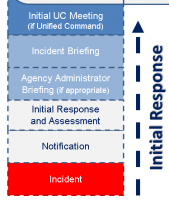
Recognizing a critical ICS training shortfall, EMSI developed the ICS-220 Initial Response Team course, an advanced ICS training course greatly expanding on initial response management concepts, to better prepare response personnel for managing the often chaotic and dynamic initial stages of the response, with additional focus on a prolonged posture …

EMSI Provides Leadership and Decision-Making Training to the IAEA

Last month, EMSI delivered a customized leadership and decision-making training session to the International Atomic Energy Agency (IAEA) in Vienna, Austria. Created by EMSI instructor/practitioners with expertise in crisis and incident leadership, this training was provided to responders from the IAEA Incident and Emergency System (IES). With a purpose of …

ICS-like EOC Structures

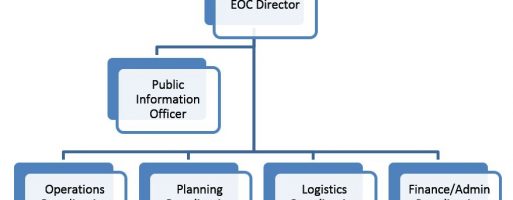
In the National Incident Management System (NIMS) guidance released in October 2017, FEMA offers suggestions on how to adopt ICS-like structures to support Emergency Operations Centers (EOC). EOCs are used in varying ways at all levels of government (City, County, Region and/or State) and within private industry to provide coordination, …

EMSI Completes Successful Deliveries of the Enhanced Initial Response ICS Course

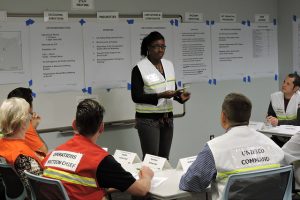
In December 2017, EMSI successfully completed two deliveries of our recently revised and enhanced ICS-220 Initial Response course with an updated Initial Response Guide Book (job aid). This course focuses on the functions of Command and key members of the Command Staff, General Staff and a few Unit Leaders during …

Summary of Changes to 2017 NIMS

On October 17, 2017, FEMA released a long awaited “refresh” of the National Incident Management System (NIMS). This update to NIMS attempts to incorporate lessons learned and best practices from a wide variety of disciplines, at all levels of government, from the private sector, tribes, and non-governmental organizations. It also …

Incident Complexity: Comparing Industry Tiers and NIMS Incident Types

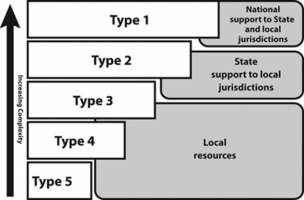
With a mix of government clients preparing for all-hazards incident management and private sector clients preparing for oil spill response on a worldwide basis, EMSI often gets questions about the relationship between the International Petroleum Industry Environmental Conservation Association (IPIECA) tiered response concept and National Incident Management System (NIMS) Incident …

Managing Extended Operations Using an ICS-201

EMSI is pleased to announce that we will be offering our recently revised and enhanced ICS-220 Initial Response Team course (All-Hazards Initial Response) at the All-Hazards IMT (AHIMT) Association (AHIMTA) Training & Education Symposium, December 2-3. Training enrollment is limited to symposium attendees and will be managed by the AHIMT …

Are you a Bi-lingual Planner? The APEX (JOPES) and ICS Connection

Like many government agencies and private industries, emergency management has its own language. From “Incident Commanders” to “IAPs” to “Staging Areas”, we use an alphabet soup of acronyms and terms to define those commonalities that enable responders across a broad spectrum to understand what we mean when we request something …

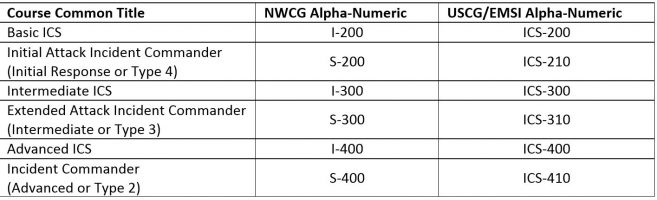
Navigating Incident Command System Course Numbering: What do the Course Numbers Even Represent?

Instructors speak in a numeric code when talking about ICS training, throwing around numbers like 300, 430, 346, 520, etc.  Where do these numbers come from and what do they represent?  There is a rich and relatively unknown history and explanation behind ICS course numbers and in this article, we …

Enhancements to the ICS-202

Anyone who has been through at least intermediate level ICS training (ICS-300) understands that one of Command’s many responsibilities is to establish the incident priorities and objectives and to communicate them to all responders.  The two most common mechanisms for communicating these Command Directions are verbally during Operational Planning Cycle …